
PVAMU “ReView” Magazine debut
 The inaugural issue of ReView magazine was released last week on campus. The publication will highlight “the innovative research” at PVAMU from engineering to business to history and beyond.
“Our groundbreaking research initiatives area complemented by creative thinking and an intentional effort to encourage collaboration among our research faculty, students,and external partners,” said ReView Publisher Cajetan M. Akujuobi, Ph.D., vice-president for research and dean of graduate studies.
The lead story for the first issue is "Knocking Big Data Down to Size," a look at how the research team at PVAMU's CREDIT Center (Center of Excellence in Research and Education for Big Military Data InTelligence) aims to tame complex issues arising from military software and hardware development. The center secured a $5M grant from the Department of Defense to perform the research, one of only three schools in the country to do so.
The magazine’s editor is Karen Cotton.
If you'd like to be added to the distribution list, email review@pvamu.edu.
PV’s Hilton Smith selected for Texas Black Sports Hall of Fame
 Giddings native and former PVAMU pitcher Hilton Smith is among 10 members of the 2016 class for the Texas Black Sports Hall of Fame. The class will be formally inducted during the hall’s 20th Anniversary luncheon on Saturday, Feb. 20 at 11:30 a.m. at the Crowne Plaza Market Center in Dallas.
Smith was overshadowed during his Negro Leagues career with the Kansas City Monarchs (1932-1948) by fellow pitcher Satchel Paige, but had a 71-31 record and a 1.68 earned run average. Smith appeared in six NL all-star games and was a member of the Monarchs 1942 championship team. He was inducted into the National Baseball Hall of Fame in 2001. Smith also pitched for the Austin Black Senators.
He was a dean's list student at PVAMU in 1928 and 1929.
Negro leagues historian Bob Kendrick once said of Smith and Paige, “The old-timers would all say that if you were going to hit anything, you better hit it off Satchel because you weren’t going to touch Hilton Smith.”
Other class members include Oakland Raiders receiver and three-time Super Bowl champion Cliff Branch of Houston’s Worthing High School, Coach Charles Brown who fielded two undefeated state championship teams -- 1960 & 1965 -- at Conroe Washington High School, and Grambling great Ernie Ladd from Wallace High School in Orange.
More PVAMU honors: Alicia Pete inducted to SWAC Hall of Fame
 Alicia Pete, PVAMU asst. athletic director for female sports, was recently included in seven new inductees to the Southwestern Athletic Conference Hall of Fame.
A native of San Antonio, Pete was a member of the Lady Panther volleyball team from 1987-1991. She earned All-SWAC honors and was selected to the SWAC All-Tournament team in 1989 and 1990. She became head volleyball coach in 1999. In her first season, Pete received SWAC Coach of the Year honors after guiding the team to its second SWAC title and first-ever appearance in the NCAA Tournament. In 2006, Pete made history once again as she led the Lady Panthers to their third SWAC Championship after winning the SWAC Tournament on the campus of Prairie View A&M University in addition to being named the SWAC’s Coach of the Year.
“This means a lot to me – not only to me, but to my family and to my university,” Pete said. “I really worked hard to get to where I am today, and I just appreciate being inducted into the Hall of Fame.”
Black Rebels: The Cimarrons of Sixteenth-Century Panama

For many years in the sixteenth century this region was under attack by armed groups of escaped black slaves who did not accept their subjection to bondage and fled to the mountains where they lived a free life based on African tribal customs. They were called cimarrones (cimarrons), a term most probably derived from cima and marrón, invented by the conquistadors. According to Garcilaso de la Vega, el Inca the word was first used in the islands of the Caribbean to describe fugitive black slaves who lived in the mountains. These free black colonies called palenques existed in many parts of Spanish America. They constituted a permanent danger to the Spanish settlements because their inhabitants often came together in armed bands to attack the cities and countryside. The palenques threatened the control of Spain over the land and were a source of concern for the Spanish authorities.
Read more about the Cimarron people here.
Black in the USSR: 3 Generations of a Russian Family
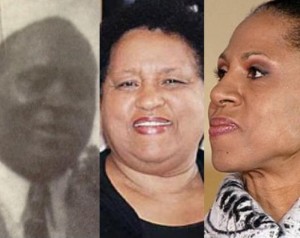 Escaping the oppression of a racist America, a black scientist named Oliver Golden took Soviet citizenship in the 1930s and began a legacy for his family that endures in Russia today.
Oliver Golden was the driving force behind the presence of a group of black scientists in Tashkent to assist in the cultivation of cotton, which had prompted Hughes’ visit. Born in Yazoo County in the Mississippi Delta in 1887, Golden was the son of former slaves who had prospered during Reconstruction. By the time he reached his 20s, however, his family home had been burned down twice as part of the broad, violent and successful campaign to restore white supremacy. He was drawn to the Soviet experiment in the 1920s and 1930s by its promises of racial equality, much as his grandfather had been inspired by the promise of Reconstruction.
Golden, after all, was a World War I veteran who had studied agronomy with George Washington Carver at Tuskegee. He had been radicalized by his experience of virulent racism while serving in the U.S. Army in France, ostensibly in a war to save democracy. Back home, he could not vote in Alabama or his native Mississippi, and he could aspire no higher than work as a chef on a railroad dining car in the relative promised land of Chicago, where he had moved by 1917. Golden worked in the Chicago labor movement in the early 1920s and joined the Communist Party around 1925. Golden later remarked, “I would have done anything to get off those dining cars.”
Along with his wife, Jane, and several other black Americans intrigued by the Soviet promise of equality, Golden arrived in Moscow in 1925 to study at the University for Oriental Workers, known by its Russian acronym, KUTV. Golden was amazed to experience first-class citizenship for the first time in his life. “Russia is the only country in the world today,” he wrote, “that gives equal chances to black and white alike.”
Read more about Golden, his family, and his Russian experience as well as what he faced when he returned to the U.S., as well as the work of his daughter, Lily, and her journey to uncover her black roots in Yazoo, Miss.
TBHPP Bookshelf
 Published scholarship on black history in Texas is growing and we'd like to share with you some suggested readings, both current and past, from some of the preeminent history scholars in Texas and beyond. We invite you to take a look at our bookshelf page -- including a featured selection -- and check back as the list grows. A different selection will be featured each week. We welcome suggestions and reviews. This week, we offer "Anti-Black Violence in Twentieth-Century Texas," edited by Bruce A. Glasrud, who provides an arresting look at the history of violence against African Americans in the state. From a lynching in Paris at the turn of the century to the 1998 murder of Jasper resident James Byrd Jr., who was dragged to death behind a truck, this volume uncovers the violent side of race relations in the Lone Star State. Glasrud has curated an essential contribution to Texas history and historiography that will also bring attention to a chapter in the state’s history that, for many, is still very much a part of the present. The book includes essays from a dozen historians.
This Week In Texas Black History, Dec. 13-19
Calendar courtesy Texas Black History Preservation Project
 13 – On this day in 1967, actor and comedian Eric Marlon Bishop was born in Terrell. In 1989, Bishop changed his name to Jamie Foxx in an effort to get more performance time as a stand-up comic at a Los Angeles club. As an actor, he became the first African American to receive two acting Oscar nominations in the same year (2004) for two different movies, Collateral and Ray.
 14 – On this day in 1978, Iola Bowden Chambers, co-founder and director of the Negro Fine Arts School in Georgetown, died in Brownwood. Bowden was a native of Holder and received a diploma in piano in 1926 from the Washington Conservatory of Music. She returned to Texas and taught music at Southwestern University where she and three of her students began teaching piano to black children in Georgetown as the Negro Fine Arts School. The program was sponsored by the Student Christian Association at Southwestern University and classes were held at the First Methodist Church of Georgetown. Over 200 students participated in the school during its existence from 1946 to 1966. The program held an annual recital but also awarded college scholarships. One former teacher said the basic impact of the organization was "the realization of the power of music as a universal language to transcend racial and cultural barriers."
 15 – Jesse Belvin, R&B singer and songwriter, was born on this day in San Antonio (some accounts say Texarkana, Texas). At the age of five, Belvin moved with his family to Los Angeles. Known by some as the "Black Elvis," Belvin's most popular hit was "Good Night My Love," which reached No. 7 on the R&B charts in 1956. He also wrote the song "Earth Angel" which was a hit for the Penguins and sold over a million copies in 1954.
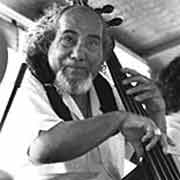 17 – On this day in 1933, jazz bassist Walter Booker was born in Prairie View, Texas. Booker moved to Washington, D.C. at an early age when his father joined the faculty at Howard University. Booker became an elite bassist playing with many prominent jazz performers, including Sarah Vaughan, Chick Corea, Donald Byrd, Sonny Rollins and Thelonius Monk. Booker played on more than 275 albums and in the late 1950s, while serving in the Army in Europe, was in the same unit as Elvis Presley.
 18 – Saxophonist and blues singer Eddie “Cleanhead” Vinson was born on this day in 1917 in Houston. Vinson was still a student at Jack Yates High School when he began his professional career with Chester Boone’s band in 1935. Working with Milt Larkin’s band, the next year, Vinson teamed with Arnett Cobb and Illinois Jacquet to form the group’s sax section. Vinson also wrote two Miles Davis classics, "Tune Up" and "Four." In the early 1950s, Vinson’s own band included a young John Coltrane.
 19 – On this date in 1963, the Mary A. Brown High School Leopards football team in Smithville won the Prairie View Interscholastic League Class 1A state championship, the only state football title in Smithville history. Brown, coached by Gene Sampson (pictured), finished the season with a 12-1 record after crushing Mineola’s McFarland Bears, 38-6, making Brown the Class A state Negro schoolboy football champions.
Blog: Ron Goodwin, author, PVAMU history professor
Ron Good win's bi-weekly blog appears exclusively for TIPHC/TBHPP. Goodwin is a San Antonio native and Air Force veteran. Generally, his column will address contemporary issues in the black community and how they relate to black history. He and the TIPHC/TBHPP staff welcome your comments. In his latest blog, "Art imitating life(?)," Goodwin draws parallels between the movie "The Hunger Games" and real life scenarios where the poor serve as entertainment for the wealthy as a way of escaping sometimes dire consequences, especially in the black community. Read it here.