


PRAIRIE VIEW, Texas (April 12, 2023) — The American Society for Engineering Education (ASEE) is a nonprofit member association focused on advancing and promoting engineering and engineering technology education. Its members include individuals, educational institutions, government agencies, and professional associations from all disciplines of engineering and engineering technology who share the ASEE vision: to foster excellent and accessible education that inspires and empowers students and engineering professionals “to create a better world.”
To assist in this mission, the ASEE established the Engineering Postdoctoral Fellowship (eFellows), which places diverse, early career Ph.D.s specializing in engineering into university research postdoctoral fellowships. The ASEE recently awarded Prairie View A&M University (PVAMU) $259,200 to host postdoctoral researcher Kamrun Nahar, Ph.D., who will join an engineering research team led by PVAMU’s Mohamed F. Chouikha, Ph.D., Executive Professor of Electrical and Computer Engineering and Chief Scientist and Executive Director of SECURE Cybersecurity Center of Excellence; and Co-Principal Investigator Annamalai Annamalai, Ph.D., professor in the Department of Electrical and Computer Engineering and Associate Director of SECURE Cybersecurity Center of Excellence.
“The University is honored to participate in a program that shares and promotes our commitment to advancing innovation and excellence in education and expanding diversity in STEM-related fields,” said PVAMU Vice President of Research and Innovation Magesh Rajan, Ph.D., P.E., MBA. “We’re proud to welcome Dr. Kamrun Nahar to PVAMU and congratulate Dr. Chouikha and his research team on achieving this important ASEE funding.”
Under the mentorship of Dr. Chouikha and Dr. Annamalai, Dr. Nahar will support the team’s research project focused on developing an efficient deep learning method – YOLOv3 – for incremental learning using a combination of artificial neural network (ANN) and stochastic learning automata (SLA). The project is called “Integrated Artificial Neural Network and Stochastic Learning and Automata Architecture for Enhanced Machine Learning.”
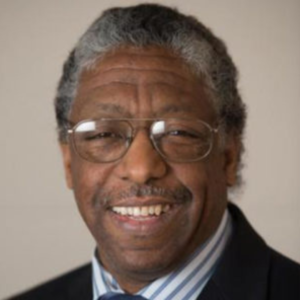
Mohamed F. Chouikha, Ph.D.
According to Dr. Nahar, “the proposed method allows incremental learning of new classes by gradually adding training samples to the model. The model retains old features while learning new ones for newly added training samples.” This method of incremental learning can significantly enhance the performance of deep learning models as traditional, supervised learning approaches require all data to be well-prepared and annotated before training.
As Dr. Nahar explained, improving the performance of deep learning models can lead to better efficiency and accuracy across computer vision applications like object detection, image segmentation, and image classification – impacting various industries like healthcare, transportation, and security. For example, the proposed method could be used in medical diagnosis systems to improve the accuracy of image-based diagnoses or to enhance the safety of autonomous cars by enhancing the vehicle’s object-detection capabilities.
“Furthermore, the proposed method’s ability to leverage unlabeled data can democratize access to machine learning for communities that may not have access to large, labeled datasets,” added Dr. Nahar. “This can lead to more inclusive and diverse models that better reflect the needs and perspectives of different communities.”
PVAMU undergraduate and graduate students will also have the opportunity to support this research by “assisting in the implementation of the proposed method, experimenting with different network architectures and optimization algorithms, and testing the method on different datasets,” Dr. Nahar said. Gaining hands-on experience in deep learning and computer vision will also allow students to develop critical thinking and problem-solving skills while collaborating with faculty who are industry experts.
“Overall, undergraduate and graduate students can have an important role in contributing to this research, and their involvement can help to enhance the quality and impact of the proposed method,” explained Dr. Nahar.
The postdoctoral researcher said she’s proud to be able to support Dr. Chouikha and his team on this project, which has “the potential to make significant contributions to both PVAMU and society by advancing the development of more accurate and efficient deep learning models that can have practical applications in various fields.”
“It’s been a great privilege for me to be a part of the eFellows program,” Dr. Nahar said. “It has provided me with valuable learning experiences and opportunities to engage with researchers and students at PVAMU.”