
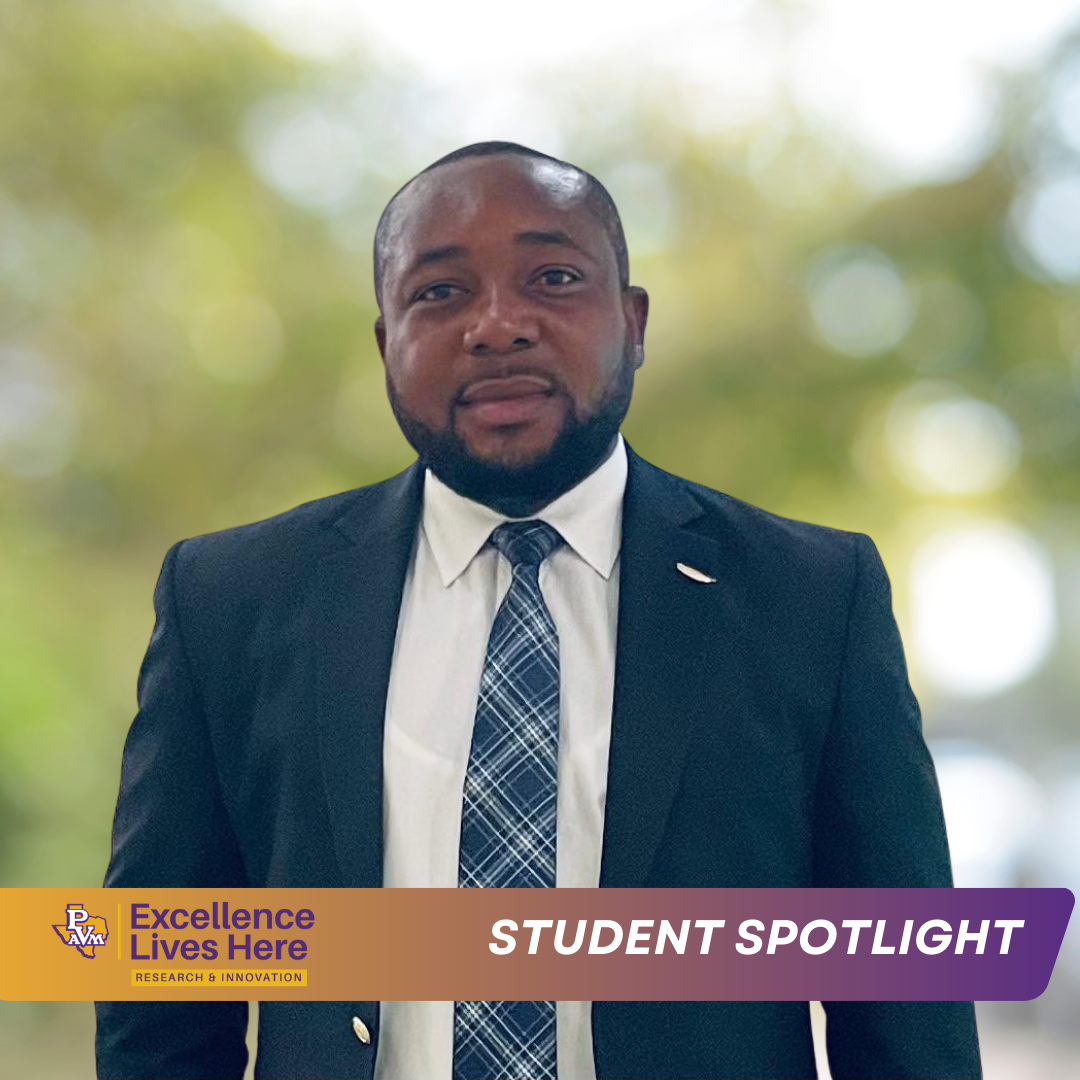
PRAIRIE VIEW, Texas (October 1, 2025) — When most people think of cybersecurity, they imagine lines of code, firewalls, and digital locks. Few picture the chambers of a national parliament. But for Emma Junior Emmanuel, a graduate student in Computer Information Systems at Prairie View A&M University with a concentration in cybersecurity and digital transformation, his journey into technology began in the halls where laws are written and policy is shaped: the Nigerian National Assembly.
As a legislative aide, Emmanuel conducted policy research, supported the drafting of legislative proposals, and advised lawmakers on pressing issues. His work emphasized digital inclusion, governance modernization, and the role of technology in national development. “I quickly realized that technology isn’t just about systems and machines; it’s about people, institutions and how policies allow innovation to flourish,” he said.

Now at PVAMU, Emmanuel has turned his focus from policy to research. As a graduate research assistant, he is investigating ways to strengthen national security through artificial intelligence. His study, Quantitative Evaluation of AI-Augmented Cybersecurity Architectures for Threat Intelligence and Vulnerability Remediation in the United States Critical Infrastructure, explores how AI can automatically detect anomalies, identify vulnerabilities, and respond to cyberattacks in real time. He is pursuing this work under Ahmed Ahmed, Ph.D., associate professor of computer science and Faculty-RISE mentor.
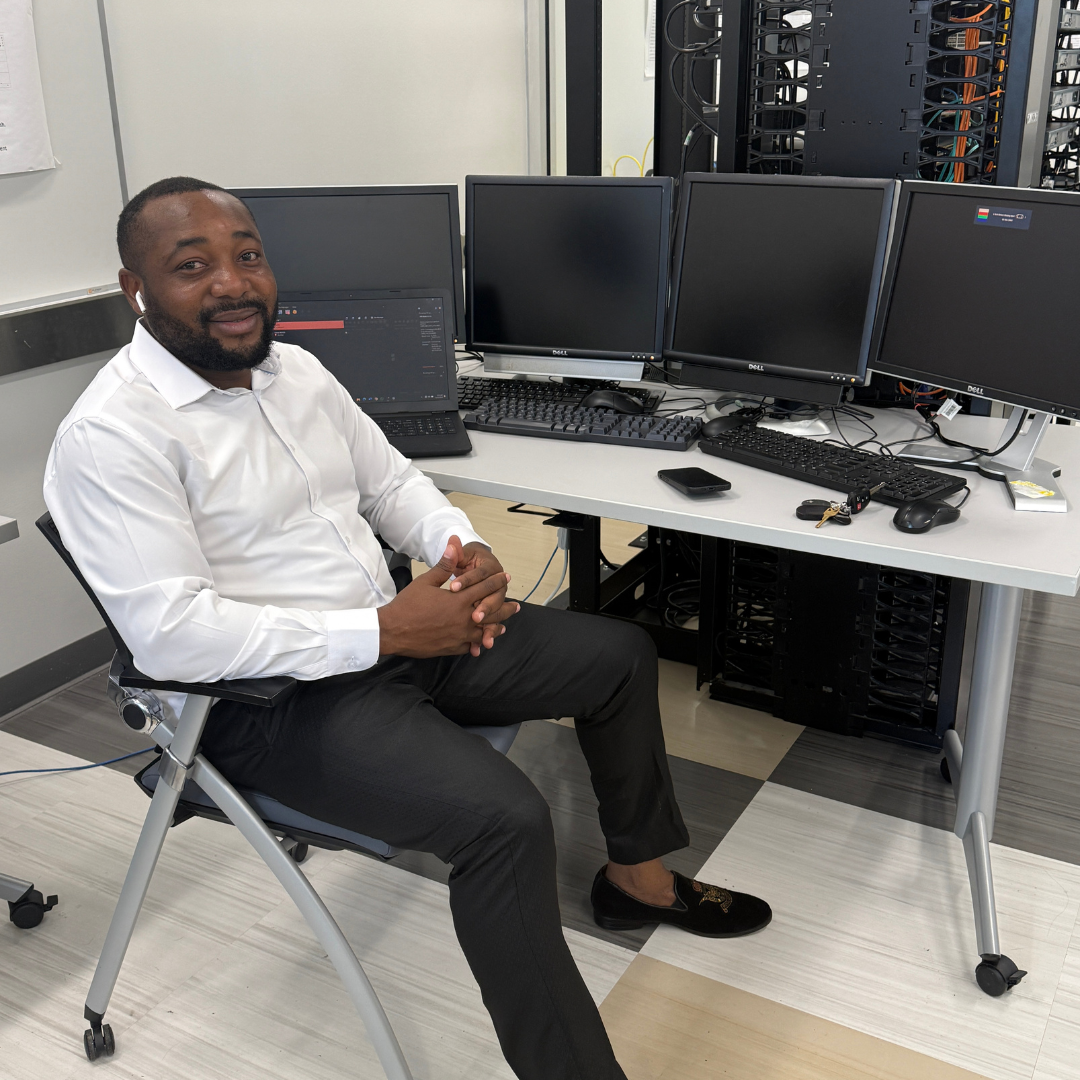
Emma J. Emmanuel, RISE Student
“Mr. Emmanuel’s research plays an important role in advancing the understanding of privacy-preserving mechanisms within the domain of AI-augmented cybersecurity,” Ahmed said. “His work on the intersection of adversarial robustness, data confidentiality, and trust establishment through AI-based frameworks offers both depth and clarity to a complex and rapidly evolving cybersecurity field. Furthermore, he took multiple of my graduate classes at PVAMU and excelled as one of the top students in the classes I teach.”
Emmanuel recently expanded his portfolio with a publication titled Systematic Review of 6G-IoT Privacy Risks, Emerging Threats, Mitigation Strategies, and Cybersecurity (Sept. 10, 2025). The research examines how 6G networks and massive IoT deployments reshape the cybersecurity landscape for critical infrastructure, from power grids to healthcare systems, while also proposing frameworks that balance innovation, resilience, and user privacy.
Beyond the lab, Emmanuel is an active member of the National Society of Black Engineers, advocating for representation and mentorship in technology. “As cyber threats grow more complex, our solutions must evolve to be not only technical but also strategic and human-centered,” he said.
Reflecting on his time in the RISE program, Emmanuel points to growth and connection as his biggest takeaways. “I got to sharpen my skills through real projects and learn directly from mentors who cared about pushing me forward,” he said. “But what stood out the most was building relationships with peers who inspire me. It feels like I’m leaving with both confidence and a community I can carry with me.”
The PVAMU Faculty-RISE Program, led by Vice President for Research and Innovation Magesh Rajan, Ph.D., P.E., empowers students through comprehensive research training, dedicated mentorship, and interdisciplinary collaboration. The program is designed to prepare the next generation of scientists and innovators to drive transformative discoveries and leadership both at PVAMU and in their future careers.
By Joe McGinty