
A brief history of Islam in America
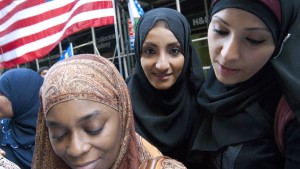 So much of the recent debate in the US over Syrian refugees and Islamophobia has tended to assume that Muslim Americans are mostly migrants and that Islam is a new phenomenon in America, along with questions about integration and assimilation.
In fact, Islam has a long history in America, going back to the earliest days of the country's founding. In the past two-plus centuries, Islam and Muslim Americans have been intertwined with American history. That story is not well-known, and while admittedly that's in part because the Muslim population of the US has often been quite small, Islam still appears in ways that most Americans might find surprising — particularly, for example, in the history of American slavery and emancipation.
Read the very insightful Vox story that presents a brief history of Islam in the United States, from its founding up through today, and a guide to the Muslim American community as it has grown and as it exists today. Included is a look at how the Founding Fathers thought about Islam and Muslims in America.
"The Founders of this nation explicitly included Islam in their vision of the future of the republic. Freedom of religion, as they conceived it, encompassed it," explains James H. Hutson, the chief of the Manuscript Division of the US Library of Congress.
Thomas Jefferson, who famously owned a copy of the Quran, had much to say about Islam's place in America. According to Hutson, Jefferson, while campaigning for religious freedom in Virginia, demanded "recognition of the religious rights of the 'Mahamdan,' the Jew and the 'pagan.'"
New book chronicles African-American characters in “The Little Rascals”
 NPR's Robert Siegel talks to author Julia Lee about her book Our Gang: A Racial History of The Little Rascals. She chronicles the story of the African-American actors in the films. They were hailed as heroes of the black community for a time but were later reviled for their roles.
Lee: "Previously, the black community had been quite supportive of "Our Gang." The NAACP supported the series and people like W.E.B. Du Bois actually visited the Hal Roach lot in a trip to Los Angeles. But later on, as the NAACP began to gain some legal victories and the community as well started to become tired of these old-fashioned stereotypes, that - by the '50s the series was already 30 years old. It seemed like a throwback, and there was greater agitation to get rid of the series from television where they were now being showed widely. And so certain local television markets ended up boycotting "Our Gang." At the same time though - and this was remarkable - is that in the '60s, there were actually also southern stations that were boycotting "Little Rascals" - not because of the demeaning black stereotypes but because these images of interracial friendship were so inflammatory."
Listen to the interview, or read the transcript, here.
Study: Black athletes and “The height of hypocrisy in higher education”
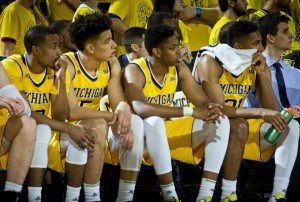 Following the strike by University of Missouri football players during the height of the school’s racial tension in November, Derrick Z. Jackson, a columnist and associate editor of The Boston Globe, recently published an informative study (click to see statistics) on Black male athletes at colleges and universities.
Jackson wrote that “universities giant and small, public and private, bring African-American men to campus at grotesque levels to earn the school millions in football and basketball revenues. In a figurative — and nearly literal sense — at many schools, if athletes did not speak up about racism or anything else, there would be no black men at all to be heard.”
Among Jackson's findings were:
- In the National Collegiate Athletic Association’s Division I schools, an African American man at a college or university is 13 times more likely to be on a football or basketball scholarship than a White man at a college or university.
- In the National Collegiate Athletic Association’s Division I schools, one of every 168 White men is a scholarship football or basketball player. At the University of Utah, half of the Black men are on football or basketball scholarships.
- At Duke University, 16 percent of the Black men have athletic scholarships compared to 1.8 percent of the White men.
- At athletic powerhouse schools such Ohio State, Florida State, and the University of Southern California, Black men are more than 50 times as likely as White men to be on athletic scholarship.
Jackson concludes that “such ratios are an indictment against universities – many use Black athletes up and spit them out without degrees.” He calls this “the height of hypocrisy in higher education.”
TBHPP Bookshelf
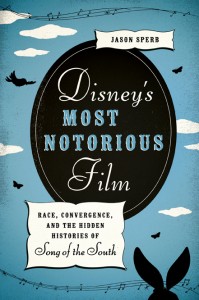 Published scholarship on black history in Texas is growing and we'd like to share with you some suggested readings, both current and past, from some of the preeminent history scholars in Texas and beyond. We invite you to take a look at our bookshelf page -- including a featured selection -- and check back as the list grows. A different selection will be featured each week. We welcome suggestions and reviews. This week, we offer "Disney's Most Notorious Film -- Race, Convergence, and the Hidden Histories of Song of the South," by Jason Sperb.
See the movie here.
The Walt Disney Company offers a vast universe of movies, television shows, theme parks, and merchandise, all carefully crafted to present an image of wholesome family entertainment. Yet Disney also produced one of the most infamous Hollywood films, Song of the South. Using cartoon characters and live actors to retell the stories of Joel Chandler Harris, SotS portrays a kindly black Uncle Remus who tells tales of Brer Rabbit, Brer Fox, and the “Tar Baby” to adoring white children. Audiences and critics alike found its depiction of African Americans condescending and outdated when the film opened in 1946, but it grew in popularity—and controversy—with subsequent releases. Although Disney has withheld the film from American audiences since the late 1980s, SotS has an enthusiastic fan following, and pieces of the film—such as the Oscar-winning “Zip-a-Dee-Doo-Dah”—remain throughout Disney’s media universe. Disney’s Most Notorious Film examines the racial and convergence histories of Song of the South to offer new insights into how audiences and Disney have negotiated the film’s controversies over the last seven decades.
This Week In Texas Black History, Dec. 27-Jan. 2
Calendar courtesy Texas Black History Preservation Project
 27 – On this day in 1941, basketball coach Nolan Richardson was born in El Paso. Richardson played collegiately at Texas Western College (now UT-El Paso). As a coach, he led Tulsa to the National Invitation Tournament championship in 1981. At the University of Arkansas, he took the Razorbacks to the Final Four three times, winning the National Championship in 1994 against Duke. He is the winningest coach in Arkansas history (389-169) and the only head coach to win a Junior College National Championship (Western Texas College), the NIT, and the NCAA Tournament. (Video: See coach Richardson's stirring Hall of Fame induction speech here.)
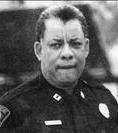 27 – This day marks the passing, in 2008, of Captain Louie White, one of the first black officers for the Austin Police Department. The department only had seven black officers when White joined in 1959 and none of them were allowed to arrest white suspects or patrol outside of East Austin. He served APD for 29 years, retiring in 1988, and was lauded as an influential community leader. The medal of valor was among his many awards and commendations. White died at age 76.
28 -- Theodore Boone was born on this date in 1896 in Winchester. Boone became an attorney, pastor, author, and editor. He was pastor of the Eighth Street Baptist Church in Temple and in 1926, he wrote “History of Negro Baptists in Texas” and served as editor-in-chief of the Western Star, a Black Baptist church publication, Boone wrote “Race Migration, Its Cause and Cure in 1924.”
 28 -- Blues artist Freddie King, “The Texas Cannonball,” died on this day in 1976 in Dallas at age 42. Originally from Gilmer, King began playing guitar at an early age and moved with his family to Chicago at age 16. There, he picked up the electrified Chicago blues style and was influenced by Muddy Waters, Jimmy Rogers and others. His 1961 hit, "Hide Away," reached No. 5 on the R&B charts and became a staple of blues group in the U.S. and Great Britain. King inspired musicians such as Jerry Garcia, Stevie Ray and Jimmie Vaughn, and Eric Clapton. King was inducted into the Rock and Roll Hall of Fame in 2012.
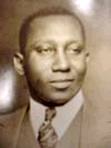 29 – In 1897, renowned baritone and composer Julius “Jules” Bledsoe was born on this day in Waco. Bledsoe was the first African-American artist to perform regularly on Broadway, including his 1927 performance in “Showboat,” where his rendition of “Ol’ Man River” is considered a classic.
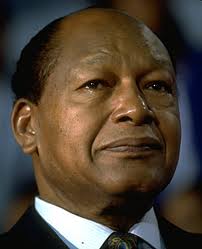 29 – Former Los Angeles Mayor Tom Bradley was born on this day in 1917 in Calvert. The son of sharecroppers and the grandson of slaves, Bradley moved with his family to Los Angeles at age seven. In 1963, after an outstanding career with the Los Angeles Police Department, Bradley became the first African-American elected to the Los Angeles city council. Ten years later, he became the first African-American mayor of a predominantly white city and served an unprecedented five terms. His achievements included securing the 1984 Summer Olympic Games for Los Angeles.
 29 – The U.S. Congress, on this day in 1845, accepted the state constitution – which permitted slavery – by two votes, and Texas became the 28th state in the Union. Two months later, on Feb. 19, 1846, the Republic of Texas was officially declared dead, however Texas' admittance to the Union ignited the Mexican-American War.
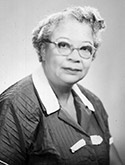 30 -- On this day in 1900, Thelma Patten-Law was born in Huntsville. Patten-Law was the first woman physician to lead the Lone Star State Medical Association, serving in 1939-40. During her term as president, the National Medical Association held its annual meeting for the first time in Texas (in Houston). She was the first African-American woman to practice medicine in Houston and the first female obstetrics-gynecology specialist in the state. In 1934, she joined the medical staff at the Maternal Health Center in Houston in the Third Ward. The center would become the organization Planned Parenthood of Houston and Southeast Texas.
1 – On this day in 1929 the first black college football bowl game was played. The Prairie View Bowl was played at Houston’s West End Park, located in the Freedman’s Town area of Fourth Ward. With the exception of four games, the bowl game was played annually until 1963 on Jan. 1.
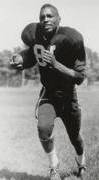 1 – The 1948 Cotton Bowl football game in Dallas featured the first African Americans to participate in the game when Southern Methodist and Penn State played to a 13-13 tie. Penn State’s roster included running back Wally Tripplett (pictured) and wide receiver Dennie Hoggard. It was the first interracial game played at the stadium.
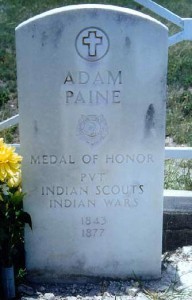 1 – Adam (“Adan”) Paine, a Congressional Medal of Honor recipient, died on this day in 1877. Paine was a scout at Fort Duncan, Texas and received the MOH for his actions during a battle at Quitaque Peak where he defended himself and four other scouts against several bands of Comanche Indians on September 26, 1874. Thanks to his efforts during the engagement, all of the scouts survived. Paine’s commanding officer, Colonel Ranald S. Mackenzie, said that Paine "has more cool (and) daring than any scout I have ever known."
Blog: Ron Goodwin, author, PVAMU history professor
Ron Good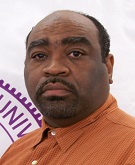 win's bi-weekly blog appears exclusively for TIPHC/TBHPP. Goodwin is a San Antonio native and Air Force veteran. Generally, his column will address contemporary issues in the black community and how they relate to black history. He and the TIPHC/TBHPP staff welcome your comments. In his latest blog, "Still dealing with issues of race," Goodwin tackles the latest affirmative action debate. Read it here.