

October 27 – Research led by College of Agriculture and Human Sciences’ Research Scientist, Adela Mora-Gutierrez, Ph.D., developed a nanoemulsion-based delivery system. The system provides a suitable means of dispersing a lipophilic bioactive compound into the aqueous environment found in many commercial food products. The major challenges in incorporating lipophilic bioactive compounds (e.g., curcumin, lutein, resveratrol) in functional food products are very low aqueous solubility and poor chemical stability. Nanoemulsion-based delivery systems assembled from natural ingredients may address these challenges. In this research study, resveratrol was selected as a lipophilic bioactive compound (phytonutrient) model. The formulation is made by entrapment of resveratrol within a caprine casein-polysorbate-20 complex, followed by homogenization in the presence of medium-chain triglycerides (MCTs) to keep the resveratrol soluble. Resveratrol entrapped with the caprine casein-polysorbate-20 complex had excellent chemical stability. This formulation is a promising technology advancement that enhances resveratrol’s solubility and chemical stability compared to traditional resveratrol formulations. Along Mora-Gutierrez, the research team included Rahmat Attaie, Ph.D., Maryuri T. Núñez de González, Ph.D., Yoonsung Jung, Ph.D., from CAHS and Sixto A. Marquez M. Sc., from Dept. of Horticultural Sciences, Texas A&M University in College Station, TX.
 To read the published article please visit:
https://www.mdpi.com/2304-8158/9/10/1394
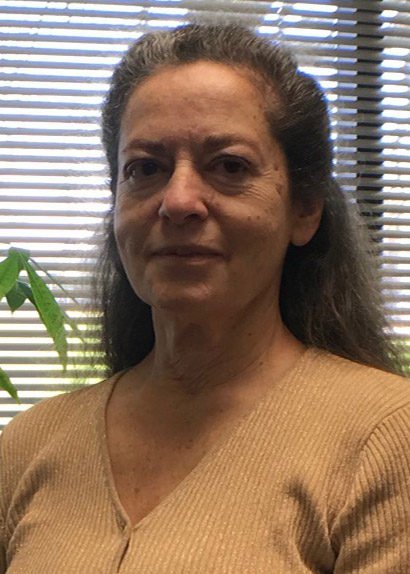
Adela Mora-Gutierrez, Ph.D.
Research Scientist
admora@pvamu.edu
(936) 261-5034