

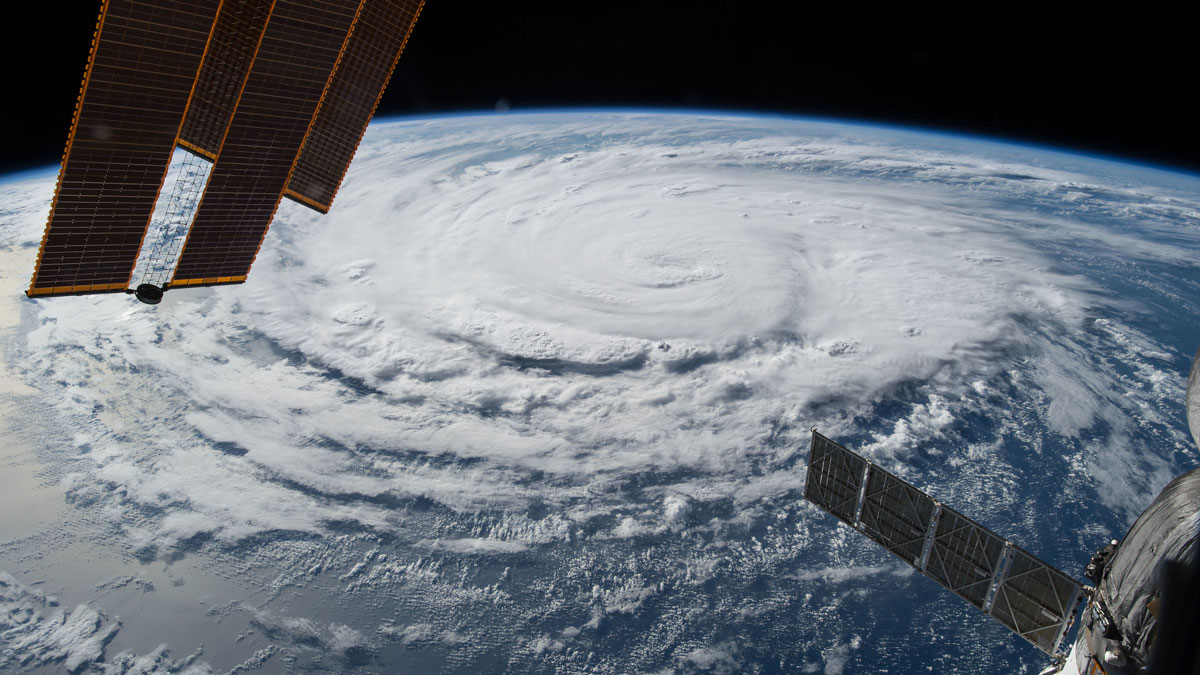
Hurricane Jimena, 2015; Courtesy: NOAA
Although Texas is impacted by many extreme weather events, including droughts, severe storms, tornadoes, and flash floods, hurricanes and tropical storms associated with the Atlantic hurricane season remain among the most destructive due to their ability to produce widespread flooding, infrastructure damage, and long-lasting economic impacts.
Flooding in Texas is not solely connected to the Atlantic hurricane season. Some of the state’s most destructive flood events, including the Hill Country floods and the Memorial Day and Tax Day floods of 2015 and 2016, were not caused directly by hurricanes, yet they resulted in devastating impacts, major infrastructure damage, and tragic loss of life. These events demonstrate that Texas remains highly vulnerable to extreme rainfall and flash flooding from multiple weather systems.
However, the most widespread and catastrophic flooding events affecting large regions of Texas are often associated with tropical storms and hurricanes. For this reason, the Atlantic hurricane season deserves special attention each year, particularly for Gulf Coast states, such as Texas, where exceptionally warm Gulf waters can rapidly intensify storms and produce prolonged heavy rainfall over extensive areas.
NOAA’s newly released 2026 Atlantic Hurricane Season Outlook predicts a below-normal season, with a 55% probability of below-normal activity, a 35% chance of a near-normal season, and only a 10% chance of an above-normal season. NOAA forecasts 8-14 named storms, including 3-6 hurricanes and 1-3 major hurricanes. The forecast reflects competing climate conditions. El Niño is expected to develop during the hurricane season, which typically suppresses Atlantic hurricane activity. However, warmer-than-normal Atlantic waters and weaker trade winds may still support storm formation and rapid intensification.
NOAA emphasized that the seasonal outlook does not predict where storms may form or make landfall. Even in a below-normal season, one major storm can create catastrophic flooding and billions of dollars in damages for Texas and other Gulf Coast states.
The 2025 Atlantic hurricane season serves as an important reminder; Although no hurricane made landfall in the United States, the first such season since 2015, the season still caused devastating impacts across the Caribbean. Hurricane Melissa alone caused an estimated $8.8 billion in damages in Jamaica and contributed to nearly 100 fatalities across several Caribbean countries. The season demonstrated that even quieter seasons can still produce extremely dangerous storms with severe regional impacts.

Ali Fares, Ph.D.
NOAA also highlighted major advances in hurricane forecasting technologies, including artificial intelligence, drones, advanced satellites, and next-generation weather models that are improving storm tracking and early warning systems.
The message for Texas residents remains clear: preparation should begin before a storm forms, not after one threatens the Gulf Coast. Additional hurricane preparedness information is available through NOAA Weather Safety, Texas Ready – Hurricane Preparedness, and Ready.gov Hurricane Preparedness.
Dr. Ali Fares is a Texas A&M University System Regents Professor and the Endowed Professor of Water Security and Water-Energy-Food Nexus at Prairie View A&M University.
-PVAMU-