

A sesquicentennial celebration connects Prairie View A&M University’s history of educational opportunity with a place shaped by generations of community, achievement, and legacy.
Prairie View, Texas | August 11, 2026
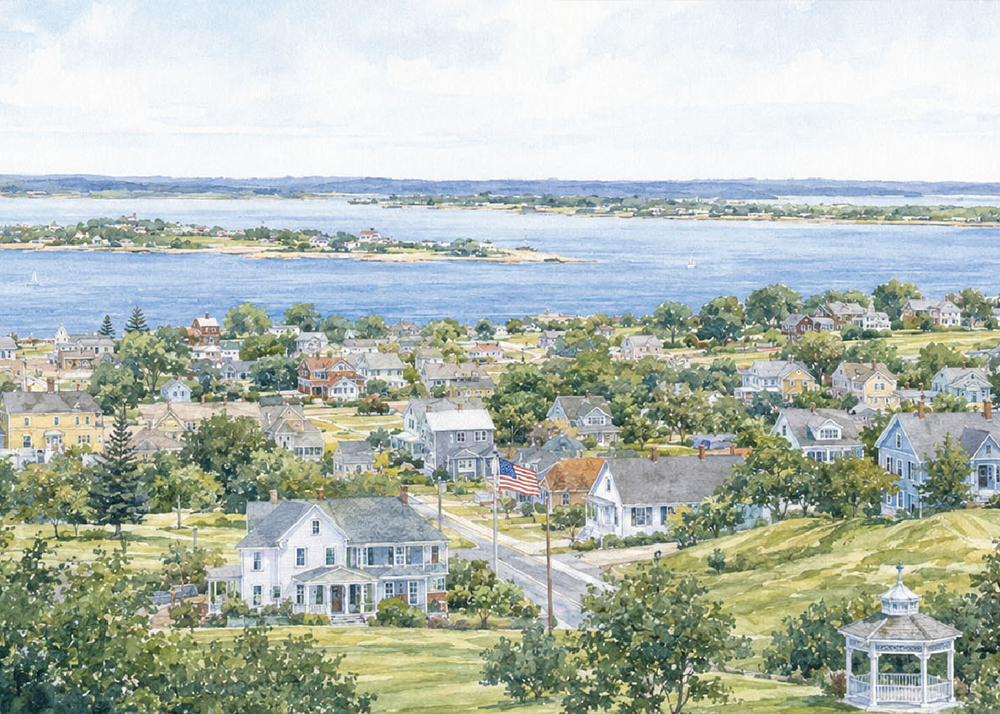
Prairie View A&M University’s presence on Martha’s Vineyard during its Sesquicentennial is more than a stop on an anniversary tour. It links two histories shaped, in different ways, by a pursuit generations of Black Americans were too often denied: opportunity — to learn, to own, to build, to gather, to prosper, and to leave something behind for the next generation.
In 1876, Prairie View was established in Texas during Reconstruction, when access to public higher education for African Americans was deeply limited. The institution became a pathway to knowledge, advancement and leadership, educating generations of students who would go on to shape communities across Texas and beyond.
More than 1,500 miles away, another story was taking shape. On Martha’s Vineyard, generations of African Americans were building a presence that would make Oak Bluffs a nationally recognized African American resort community. Families put down roots, entrepreneurs opened businesses, property changed hands, and traditions took hold that drew people back year after year. A National Park Service Theme Study describes Oak Bluffs as a “resilient African American Resort Community” that developed over time and gained a national presence.
Neither story could have revealed its full legacy at the beginning.
The institution, established in 1876, would eventually educate more than 87,000 graduates and produce generations of educators, scientists, engineers, artists, and leaders. The Black families and entrepreneurs who put down roots on Martha’s Vineyard would help establish traditions and a cultural presence inherited by generations to come.
Yet here we are, 150 years later, watching those legacies meet.
Building Something That Would Last
The history of Black life on Martha’s Vineyard runs deep. The African American Heritage Trail, established in 1998, preserves that history through more than 40 sites tied to the lives and contributions of people of African descent across the island. The Commonwealth of Massachusetts describes the trail as encompassing more than 40 sites that highlight past and present African American community connections.

A summer sunset at Oak Bluffs
In Oak Bluffs, that story became especially visible. Charles and Henrietta Shearer settled on the island in the late 19th century and, in 1912, opened Shearer Cottage, the first African American-owned guest house on Martha’s Vineyard, according to the National Park Service. Along with Inkwell Beach, the cottage helped anchor the growing Black community in Oak Bluffs.
That history carries complexity. The African American Heritage Trail documents “Inkwell” as a Jim Crow-era term associated with a “colored beach.” Yet over generations, a place shaped by the racial barriers of its time became a place of gathering and belonging.
Oak Bluffs grew into a place where Black families returned every summer and where professionals, artists, writers, public figures, and civic leaders gathered. The Smithsonian’s National Museum of African American History and Culture preserves a 1983 Boston Globe article describing Oak Bluffs as a favorite holiday destination for prominent and well-to-do Black residents of Boston and other East Coast cities. The article references figures including Martin Luther King Jr., Coretta Scott King, Sen. Edward Brooke, Vernon E. Jordan, and Diana Ross among those associated with the island.
It became far more than a vacation spot: a community shaped by ownership, entrepreneurship, culture, family, and pride.
Those ideas carry a familiar resonance on The Hill.
An Institution Built on Opportunity
Prairie View A&M University was established on Aug. 14, 1876, during a period when education carried profound significance for formerly enslaved Texans and their descendants. From its earliest years, the institution represented an investment in opportunity, a place where education could help open doors that had long been closed.
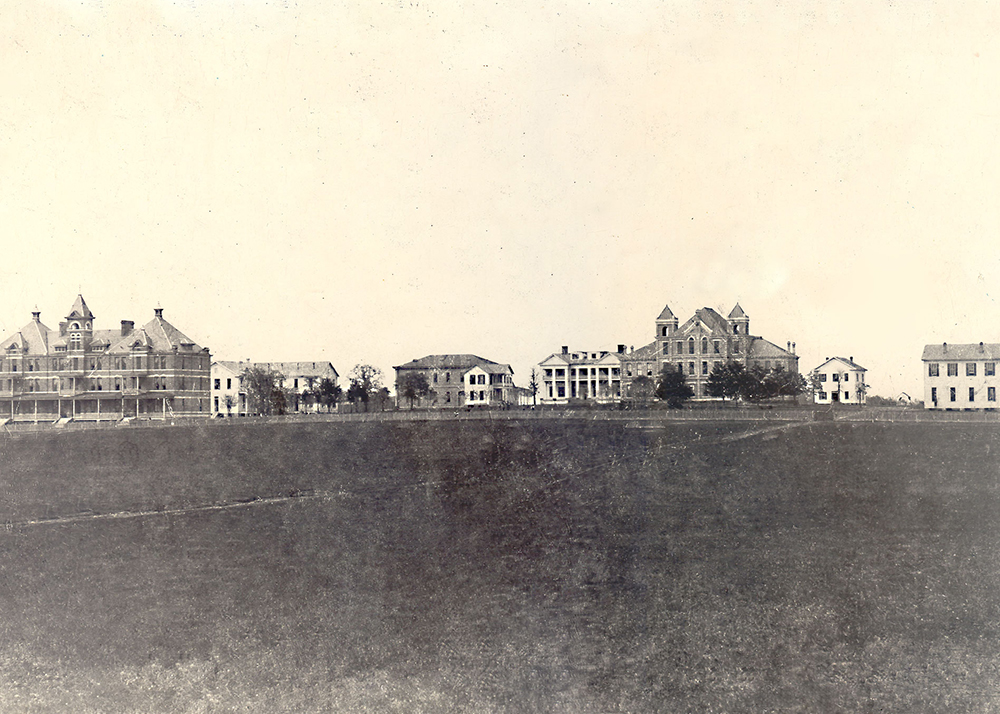
PVAMU’s campus in the early 1900s
Over 150 years, Prairie View has educated generations of students who have gone on to lead in education, science, engineering, medicine, the arts, public service, business, and communities across Texas and beyond.
The scale of that legacy is now measured in more than 87,000 graduates.
That journey is captured in the University’s Sesquicentennial theme, “Rooted in Resilience. Rising in Eminence.”
But resilience is not simply survival. It is also what people build while surviving, and what that makes possible for people they may never meet.
That is where the histories of The Hill and the Vineyard begin to speak to one another. One built opportunity through an institution devoted to education. The other built it through community, ownership, entrepreneurship, and culture. Both became sources of pride. Both grew because generations returned, invested, and carried their traditions forward.
And both show what can happen when people create opportunity not just for themselves, but for those who come after them.
Legacies in Conversation
That connection gives meaning to PVAMU’s Sesquicentennial programming on Martha’s Vineyard.
Through its Art Salon, the University brings its sesquicentennial story into a community with its own deeply rooted cultural history. The Aug. 11 event at the Martha’s Vineyard Museum will feature the unveiling of a monumental work created by alumna and commissioned artist Charis Kelley to commemorate the University’s 150th anniversary. The work visually interprets the Sesquicentennial theme, “Rooted in Resilience. Rising in Eminence.”
Through the screening of “Beneath the Soil: The Promise and Proof of Prairie View A&M University,” the University brings forward stories rooted in history, memory, and place. The 45-minute documentary traces PVAMU’s journey from its origins in 1876 through the generations of people who helped build and sustain its impact.
These events do more than mark PVAMU’s past; they continue the very tradition the Sesquicentennial honors: preserving stories and ensuring that what one generation built is not lost to the next.
The people who built Prairie View in its earliest years did not know what The Hill would become. The families who put down roots on Martha’s Vineyard could not have known the full legacy they were creating. Neither could have imagined that, generations later, those histories would meet through art, storytelling, and a university marking 150 years.
Perhaps that is the deeper lesson of a Sesquicentennial: We do not always know when we are building history.
Sometimes it looks like opening a school. Sometimes it looks like buying a home, welcoming travelers into a guest house, gathering on a beach, or preserving a story that might otherwise disappear. Only generations later can we trace the line connecting those acts.
From The Hill to the Vineyard, and Forward
A 150th anniversary invites a university to look back, but PVAMU’s Sesquicentennial is just as focused on what comes next.
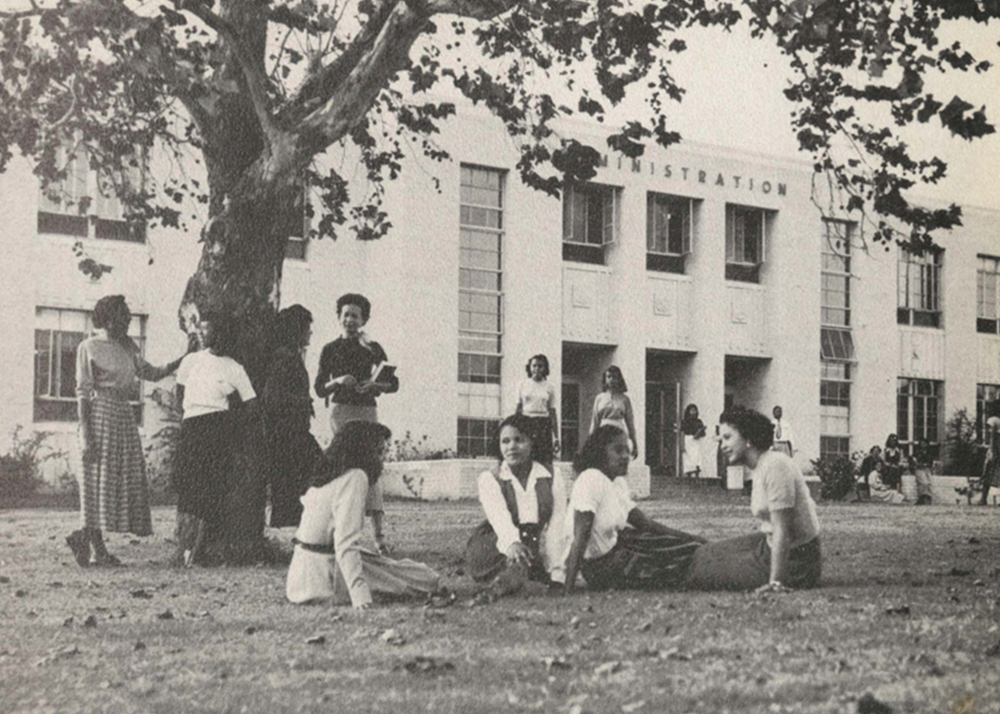
PVAMU students gather in front of the Administration Building
Its history now belongs to more than 87,000 graduates and to generations of faculty, staff, students, and families who have carried it forward. The legacy on Martha’s Vineyard tells a similar story: what earlier generations built has been inherited, protected, and reimagined by those who followed.
That is what “From The Hill to the Vineyard” means. It is not simply the distance between two places on a map; it is the connection between two legacies, different in origin, joined by enduring ideas of opportunity, ownership, creativity, community, and pride.
For a moment, during PVAMU’s 150th year, those legacies meet, not simply to remember what was built before us, but to consider what is being built now and who, generations from today, may inherit it.
Because the most extraordinary thing about a 150-year legacy may be this: the people who started it could not see us coming. And we cannot yet see who is coming after us.
Learn more about PVAMU on the Vineyard here.
-PVAMU-