
PRAIRIE VIEW, Texas (Oct. 22, 2026) – In 2012, Dr. Olivia Solomon ’15 stepped onto Prairie View A&M University’s campus as a transfer student. Ten years after earning her bachelor’s in biological science, she returned as an assistant professor of biology.
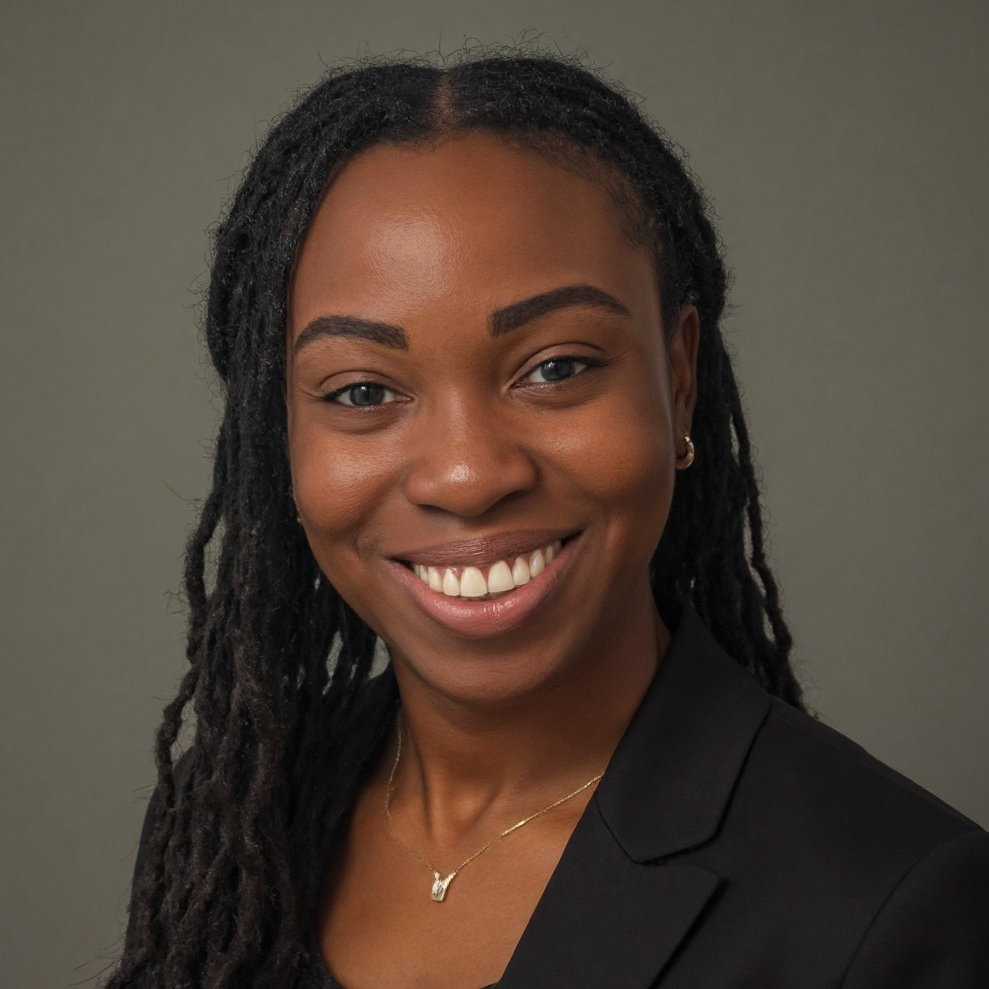
Olivia Solomon, Ph.D. ’15
In the decade that she was away from the University, Dr. Solomon trained as a post-baccalaureate research education program fellow and earned a Ph.D. in Human Pathophysiology/Translational Medicine from the University of Texas Medical Branch (UTMB). Through her training, she deepened her understanding of the biological processes that drive inflammation and disease.
She carried PVAMU with her every step of the way, speaking highly of the talented students studying on The Hill. When the opportunity to return to PVAMU presented itself, Dr. Solomon jumped at it.
“Returning to Prairie View A&M University to teach and conduct research has been both meaningful and deeply personal for me…The University has always felt like home, a place where I was known, supported, and encouraged to grow,” said Dr. Solomon.
It has become her mission to extend the same mentorship, sense of belonging, and opportunities to her students as a chance to give back to the community that helped her become the woman, researcher, and professor she is today.
“I believe deeply in the potential of PVAMU students, and I am committed to pouring into them the same way my mentors poured into me.”
An Origin Story Grounded in Values and Vision
As a child growing up in Missouri City, Texas, Dr. Solomon had debilitating migraines. With limited treatment options available, she withdrew socially from her peers and became more introspective, dedicating countless hours to examining specimens under her microscope. While her peers played with toys, she busied herself with her stethoscope. Her first hands-on experience came when her pediatrician, Dr. Plum, invited Dr. Solomon to assist during her sister’s physical examination.
Those experiences sparked a desire to understand how the body works and an interest in biology, medicine, and healthcare, and later, in her research on improving treatment options for patients.
Dr. Solomon’s family also nurtured her curiosity, showering her with science textbooks and educational VHS tapes. Her father encouraged his children to research their interests, and each summer, her mother, a now-retired school administrator with the Houston Independent School District, collected textbooks for Dr. Solomon and her sister to study in preparation for the upcoming school year. By the time she enrolled in Hightower High School’s medical academy, her interest in science had only grown.
As the first in her immediate family to attend a four-year institution, Dr. Solomon’s college acceptance was a proud milestone. But despite consistently making the Dean’s List, she felt unsupported and believed the institution offered few opportunities for career advancement.
Dr. Solomon temporarily transferred to a community college and began searching for a campus where she could advance, and one name was repeatedly recommended: Prairie View A&M University.
She was no stranger to the University; it was woven into her family’s history—grandparents, aunts, uncles, and godparents were all proud alums. She grew up visiting campus and hearing about professors who genuinely cared about their students. Yet, one defining moment solidified her decision.
Dr. CherRhonda Hollins contacted her to encourage her to apply for a Research Experiences for Undergraduates (REU) program targeting transfer students, Dr. Solomon felt seen. That single act spoke volumes.
Opportunity and Purpose Meet on The Hill
In all the years Dr. Solomon studied science, she never considered becoming a scientist until she met her mentor, Dr. Quincy Moore. The chance meeting was transformative.
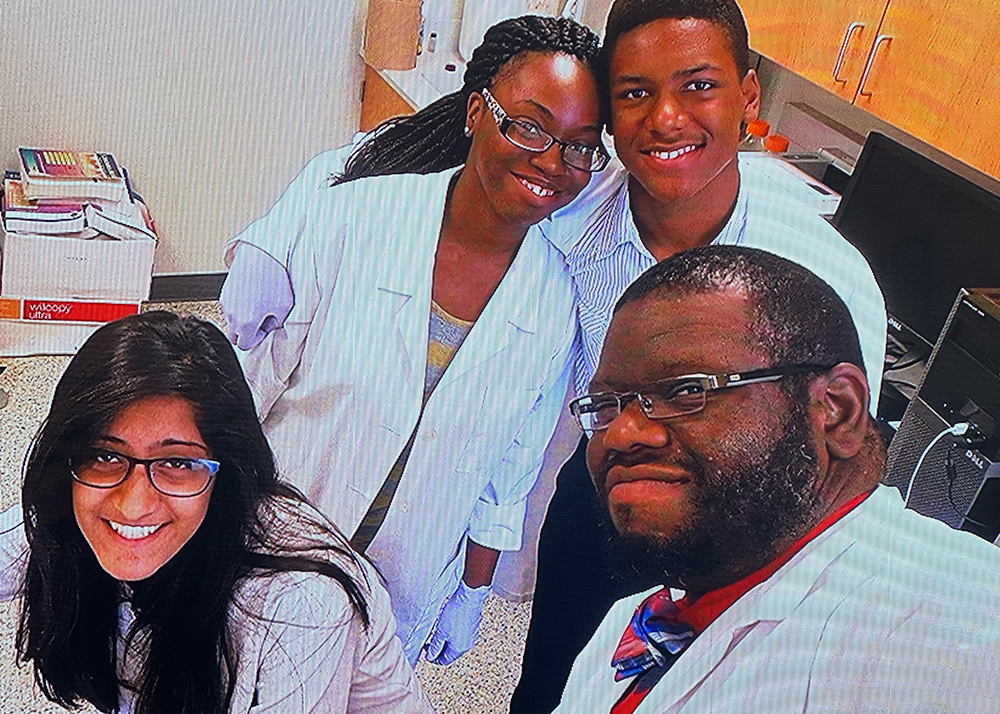
Dr. Solomon (top left), pictured alongside her peers and Dr. Moore (bottom right)
Dr. Moore, a tenured associate biology professor, guided her on reading scientific literature critically, maintaining a lab notebook, developing protocols, and thinking independently as a researcher. “He was the first person to introduce me to scientific research, and that moment fundamentally changed the trajectory of my life,” she said. “He profoundly shaped my career and inspired me both as a scientist and as a person.”
Eventually, Dr. Solomon also developed a working relationship with Dr. Audie Thompson, a research assistant professor in the Department of Chemical Engineering, who would become another mentor.
Under Dr. Moore and Dr. Thompson’s tutelage, the naturally quiet Dr. Solomon learned to communicate her scientific process confidently.
“When I presented my research at the ABRCMS conference and received Best Poster Award…I realized that pursuing a Ph.D. was not only possible, but that I truly belonged in scientific research,” Dr. Solomon recalled. She would go on to receive multiple awards at local and national conferences.
Her success motivated her to dive further into her research, sometimes working long nights in the lab without rest. Dr. Moore encouraged her to maintain balance and self-care. “Save that energy for graduate school,” he would often remind her. It was evident that he was not only invested in her future but also cared about her well-being as a person.
From Dr. Harriette Howard-Lee Block to Drs. George E. Brown, Deirdre Vaden, Gloria Regisford, Cleveland Lane, and Alphonso Keaton, Dr. Solomon says the department, as a whole, encouraged her to pursue professional development programs, attend conferences, and leverage resources and departmental opportunities.
“Collectively, their investment created an environment where students were supported academically, professionally, and personally,” said Dr. Solomon.
Those formative experiences as a student were instrumental in shaping Dr. Solomon’s teaching philosophy, one that prioritizes an environment where students know their department is committed to their growth at every level.
“I strive to be a positive and steady presence in my students’ lives, much like my mentor once was for me. Dr. Moore was my answered prayer during a pivotal time in my academic journey…He demonstrated that caring for students holistically leads to long-term success.”
The Student Becomes the Teacher
Dr. Solomon sees herself in many of her students. Having faced her own challenges throughout her academic journey, she understands that every student can learn and reach their full potential with the right guidance, encouragement, and learning environment.
“Dr. Solomon is excellent! She cares about her students and their success. She is one of those professors who truly just wants you to understand what she is teaching…Hands down the best Biology professor on the hill,” reads one student review.
Striving to lead with empathy, Dr. Solomon describes her classroom as a place where rigor and care coexist. “I hold high expectations because I want students to develop the knowledge, discipline, and critical thinking skills required to succeed beyond Prairie View A&M University.”
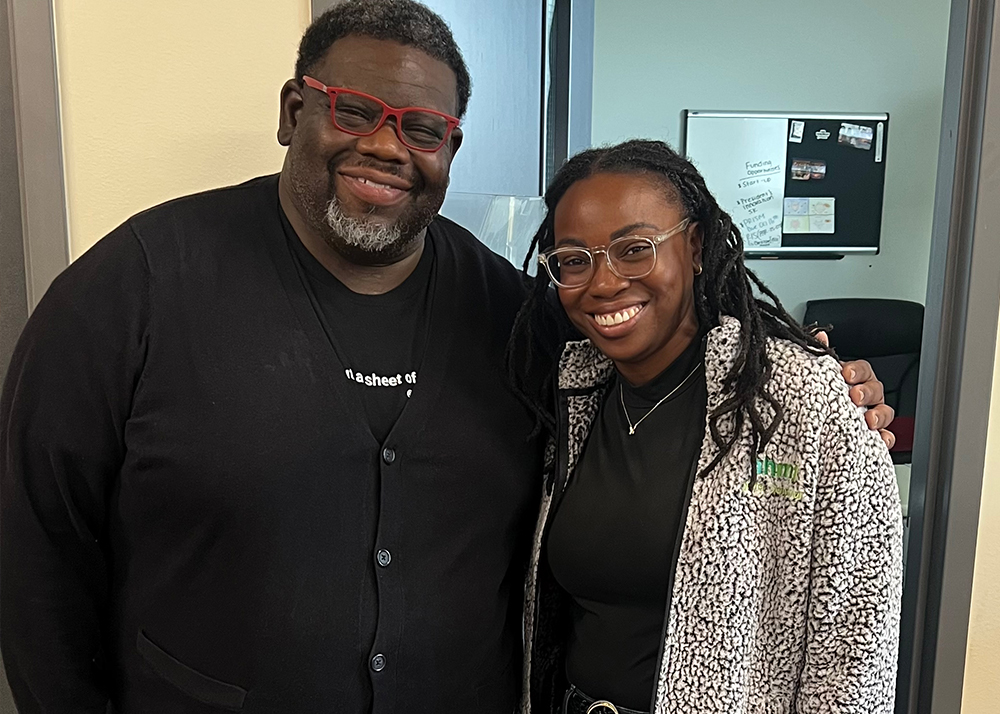
Moore and Solomon
Like her mentors before her, she reminds students that a long and meaningful career in science isn’t solely dependent on grades, achievements, or intelligence alone. As students advance into increasingly competitive spaces, she urges them to embrace resilience and practice articulating their work verbally and in writing to both scientific audiences and the broader public.
Watching students who initially felt hesitant or reserved about speaking in class transform into confident individuals who willingly present their ideas has been a rewarding experience for Dr. Solomon.
“I value these interactions because they allow me to better understand where students may be struggling and to adjust my teaching approach to meet their needs.”
Dr. Solomon also ensures that students are exposed to research and field experiences, including through a partnership with UTMB and with her postdoctoral mentor, Dr. Kara Marshall, at Baylor College of Medicine. “These partnerships are essential for providing students with access to high-impact research environments, hands-on laboratory experiences, and mentorship that strengthens their applications for graduate and professional programs.”
PVAMU Produces Productive People — and Brings Them Home
Dr. Solomon is looking forward to continuing to build on the longstanding PVAMU legacy through teaching, research, and leadership.
“My goal is to establish sustained, high-impact collaborations with scientists outside the institution that will help advance R1-level research capacity at PVAMU.”
She recently established the Neuroimmune Mechanobiology Lab and hopes to nurture new relationships with industry leaders like Dr. Gracie Vargas, a renowned researcher in advanced biomedical imaging. Through such expansions and partnerships, she aims to secure competitive grants for the University.
“This research agenda will not only contribute to the scientific community but will also provide students with rigorous training in cutting-edge techniques. By engaging in advanced neuroscience and imaging approaches, students in my lab will be well-positioned to compete successfully in graduate programs, professional schools, and research-intensive careers.”
She aspires to grow into a leadership role to further the University’s long-term direction, advocate for students, and ensure institutional priorities remain aligned with the unique HBCU mentorship culture.
In the meantime, Dr. Solomon is enjoying her role as a professor—leading interdisciplinary research, teaching foundational biology, and mentoring students. She continues to pursue opportunities to grow professionally and was recently announced as a 2026 Elevate Fellow.
A person of faith, Dr. Solomon has come to view the classroom as another place to serve others. Working with students who are motivated, resilient, and eager to learn has only affirmed that returning to PVAMU was the right decision.
By Whitney Stovall
-PVAMU-