

Prairie View, Texas | October 5, 2026
PRAIRIE VIEW, Texas (Oct. 5, 2026) – For 150 years, the oak trees on The Hill have stood throughout Prairie View A&M University’s history.
They have witnessed the University’s beginnings, its challenges, its growth and the generations of students who have passed beneath their branches.
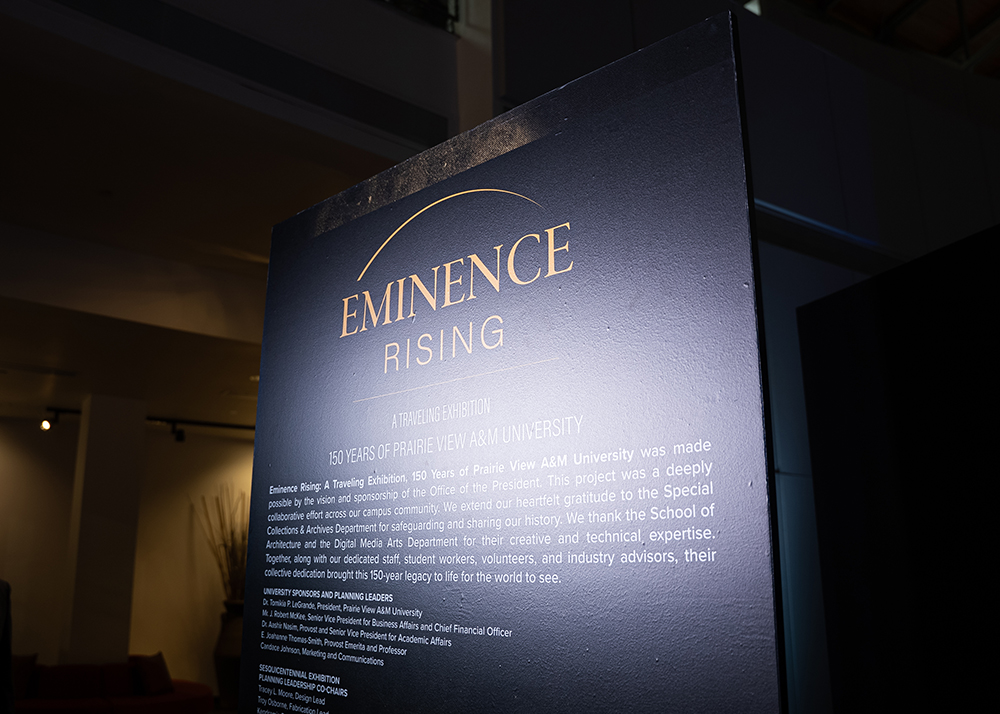
Now, a replica of one of those trees stands at the center of “Eminence Rising: A Traveling Exhibition, 150 Years of Prairie View A&M University,” helping tell a story that began in 1876 and continues today.
“I want people to experience this exhibit the same way they experience our campus,” PVAMU President Dr. Tomikia P. LeGrande said during the exhibition’s opening reception in Dallas. “It is hard for people to come to visit those 1,400 acres that are our main campus and leave unchanged.”
The exhibition, part of PVAMU’s Sesquicentennial celebration, traces the University’s journey across multiple historical eras, from its beginnings during Reconstruction to its emergence as a nationally recognized institution of scholarship, leadership, innovation and service.
But telling 150 years of Prairie View history required more than choosing dates and milestones.
For the team behind the exhibition, it meant deciding which people, moments and stories could help visitors understand not only where Prairie View has been, but who Prairie View has always been.
Building the Story of 150 Years
Tracey L. Moore ’98, curator and design lead for the exhibition, began developing a similar project in the spring of 2025. When the University began shaping “Eminence Rising,” she brought that work into the larger exhibition, helping to create a foundation.
One of the team’s priorities was making sure the University’s earliest leaders were remembered.
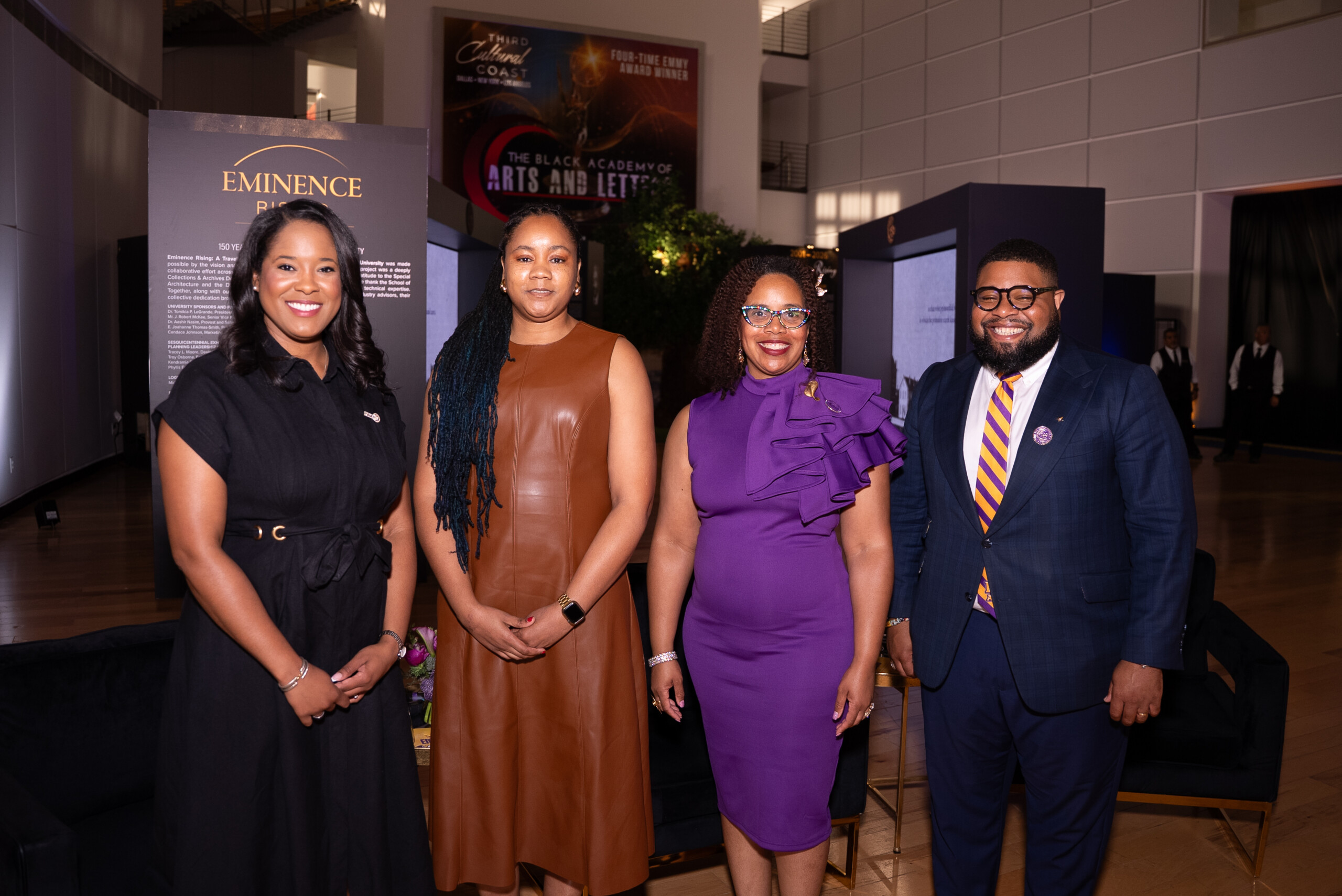
Kendramia Prestage ’10, ’12 and Tracey L. Moore ’98, center, with PVAMU alumni Priscilla Barbour Randle ’14 and Harrison Blair ’13
Co-leader and technology lead, Kendramia Prestage ’10 ’12, said they focused on the principals and presidents who helped establish and build the institution, including leaders whose stories may not be as familiar today.
As the research continued, the challenge became clear: there was too much history to fit into one exhibition.
“We would text each other,” Moore recalled of her work with student researcher India Graves. “I just read this … this needs to be here.”
“The difficulty was that everything we learned was significant,” Prestage said. “You really could not leave anything out.”
The solution was to let the exhibition tell the story in more than one way.
Not one, but six major eras are presented through photographs, biographies, artifacts and historical moments. Holographic and three-dimensional renderings bring historic campus buildings and prominent figures to life. At the same time, interactive kiosks connect visitors to “The Extraordinary History of PVAMU,” a digital story map created by alumna Trinity Morris ‘25.
The story map gives visitors a way to continue exploring the history beyond the exhibition itself, including archival photographs, multimedia presentations and stories of PVAMU excellence.
Planting seeds for a legacy that continues
The exhibition reveals the threads that weave generations of Prairie View history. Among them is health care.
Moore pointed to a moment in the University’s early history when Principal Edward Blackshear received approximately $2,000 to develop a hospital. Later, leaders built upon that foundation, including Principals Isaiah M. Terrell and John G. Osborne, whose work helped establish PVAMU’s nursing school.
Today, the University’s presence in the Texas Medical Center includes its nursing program.
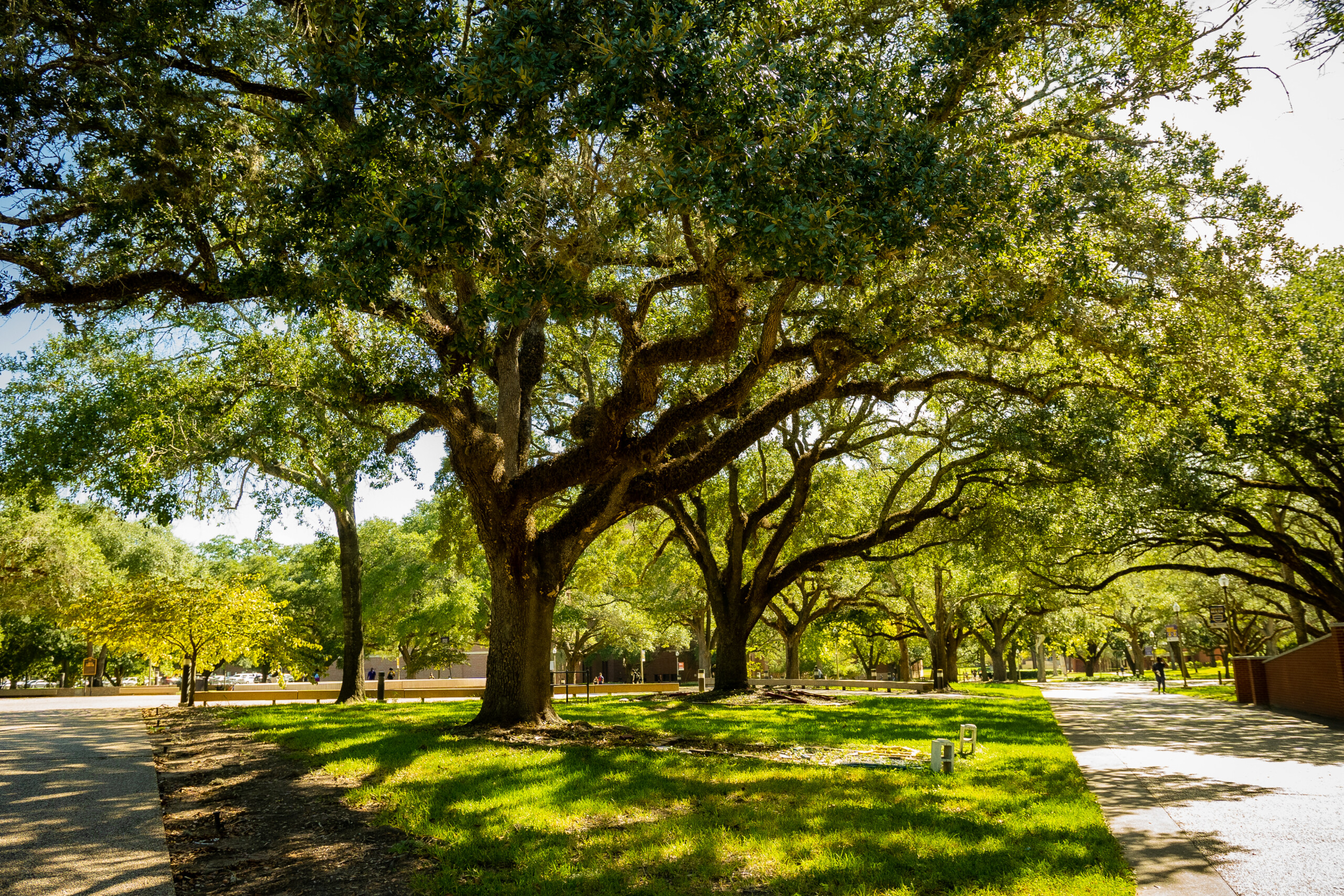
PVAMU campus
For Prestage, that story captures something larger about the University. A relatively small investment became part of a much larger legacy as generation after generation continued to build on what came before.
That idea of growth and continuity is also represented physically in the exhibition.
At its center stands an oak tree, representing the continuity of Prairie View across 150 years.
The trees have witnessed the land’s history, the University’s beginnings, its challenges and its transformation. Now, they serve as a reminder that the people walking through the exhibition are part of that same story.
More than history. A Feeling.
For Prestage, the goal is not simply for visitors to leave knowing more about PVAMU.
She wants them to encounter something deeper.
“You should really feel the ancestors and the spirit of Prairie View,” Prestage said. “You should just feel like you’re home for the first time.”
That sense of home is woven throughout the exhibition.
Large LED walls create an immersive environment before visitors enter the exhibit. Historic recordings and student-created voiceovers help transport visitors into earlier periods of the University’s history. Holographic images bring prominent figures from PVAMU’s past into the experience.
And music helps tell the story, too.
Moore recalled hearing students sing the University’s alma mater a cappella and immediately thinking it belonged in the exhibition. The team incorporated a 1969 recording, helping connect visitors to the sounds of earlier generations.
“I want people to feel goosebumps when you walk through the tunnel,” Prestage said.
That emotional response matters because the exhibition is ultimately about more than the past. It is about what happens when people understand that they are part of something that began long before them.
The next chapter belongs to a new generation
The University’s 150-year history is a story of people who were given limited resources but continued to build. It is now a “transformational educational oasis,” according to Dr. LeGrande.
Today, the University has more than 10,000 students representing 39 states and 16 countries.
PVAMU students gather in front of the Administration Building
The exhibition honors the people who helped make that possible, but it also asks visitors to think about what comes next.
On the walls of “Eminence Rising” is a quote attributed to Principal Blackshear: “You have seen today something of the line of work attempted. Much remains to be done, but the foundation has been laid, and the rest will follow in due season.”
For Moore, the words capture the story of PVAMU across generations. Each principal and president built upon the foundation left by those who came before, raising the standard along the way.
The students who helped create “Eminence Rising” are themselves part of that next chapter. Their hands and creativity helped shape the exhibition, connecting them directly to the history they were researching.
And that may be the heart of the experience: the realization that Prairie View’s history is not finished.
“We are so appreciative of all of the people who sowed the seeds that have produced the fruit that we all now take part in at Prairie View,” Dr. LeGrande said. “And now it’s our turn to make sure that we are creating the Prairie View of the future for the next 150 years.”
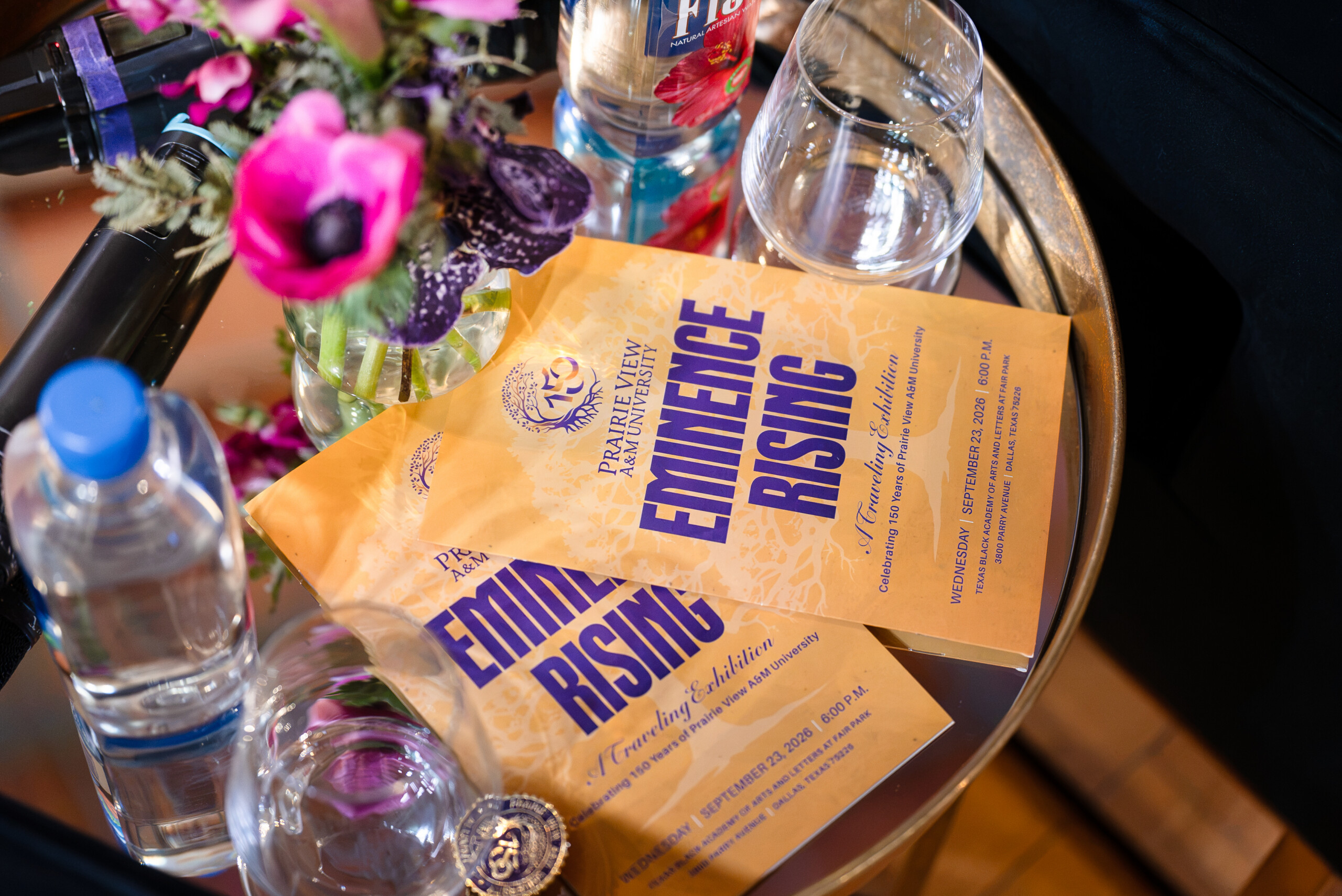
After its Dallas engagement, “Eminence Rising” returns home to Prairie View, where it is on display at the Welcome Center from Oct. 5 through Nov. 30. The exhibition then continues its journey to Houston, Austin and Atlanta.
For alumni, it offers a chance to see their own chapter of Panther history reflected in the exhibition. For current students, it serves as a reminder that they are part of a lineage that spans generations. And for visitors discovering PVAMU for the first time, it offers an invitation to understand not just what the University has accomplished, but why its story continues to matter.
Because 150 years ago, the foundation was laid; trees were planted.
Now, a new generation is deciding what rises from it.
For more information about “Eminence Rising: A Traveling Exhibition, 150 Years of Prairie View A&M University,” visit pvamu.edu/150/traveling-exhibit.
-PVAMU-